
A road drawing may call for “geogrid” without making the intended layer clear in the purchase request. That missing detail matters: a grid placed within an asphalt overlay is being asked to do a different job from one placed below an aggregate base.
Fiberglass geogrid may be specified in an asphalt overlay where existing joints or cracks create tensile stresses. Biaxial plastic geogrid is commonly considered in an aggregate base or working platform, where the fill and grid need to work together. A tensile-strength figure by itself will not tell a buyer which product belongs in the section.

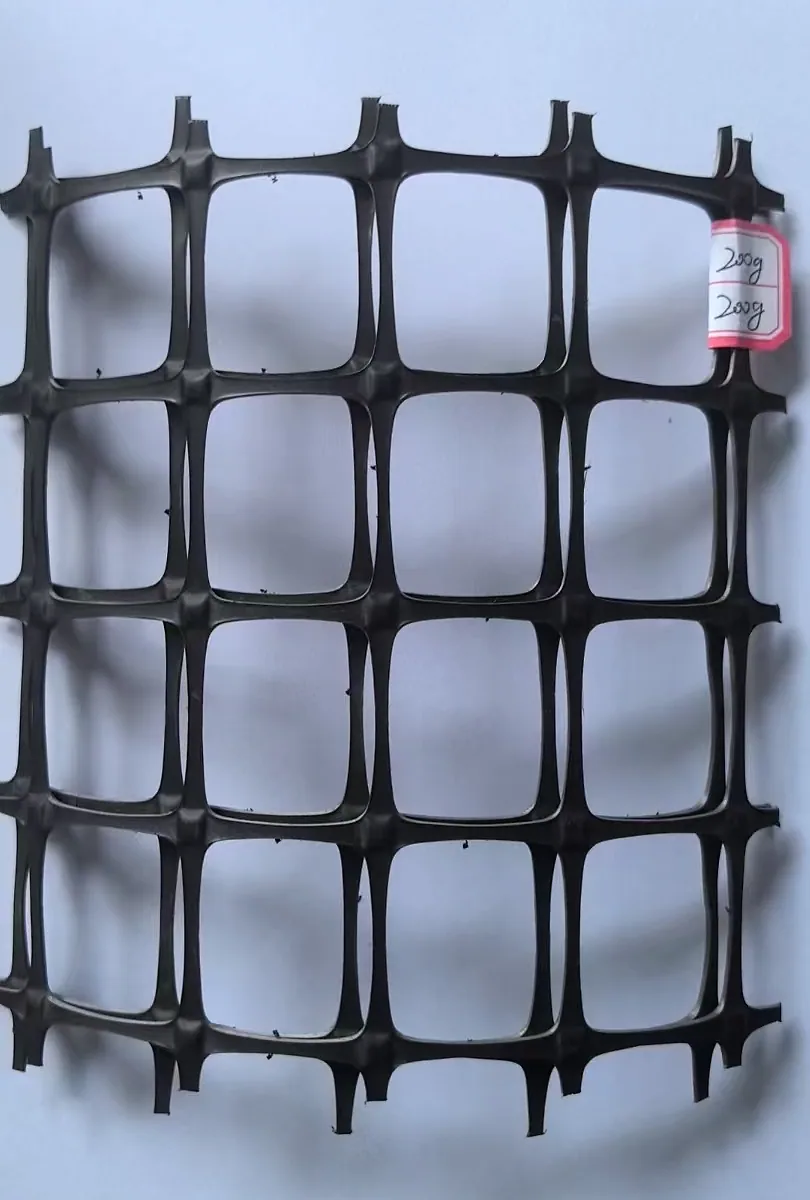
Where does each geogrid go?
| Design question | Fiberglass geogrid | Biaxial plastic geogrid |
|---|---|---|
| Typical layer | Asphalt pavement overlay or rehabilitation layer | Granular road base, subbase or ground-stabilization layer |
| Main interaction | Works within an approved asphalt layer build-up | Aggregate engages with grid apertures |
| Project information | Existing pavement condition, cracks or joints, tack coat and overlay design | Subgrade condition, aggregate grading, layer thickness and loading |
| Installation focus | Surface preparation, bonding, placement and overlay construction | Subgrade preparation, grid placement, aggregate cover and compaction |
Use the comparison to identify which questions to take back to the road designer. The approved section and its required test values control the final selection.
Why the largest strength number does not settle the choice: A published fiberglass asphalt-grid data sheet lists an ultimate tensile strength of 100 × 100 kN/m (machine × cross-machine direction). An FHWA reference table gives 18 kN/m as a Class 1 minimum ultimate multi-rib tensile strength for geogrids used in base stabilization. These are figures from different products and applications; they are not VABREN test results or interchangeable design targets. The asphalt layer, aggregate and subgrade still determine which grid and which properties to specify.
For an asphalt overlay, investigate the cause of cracking
Cracks visible in an existing surface may reflect movement in underlying joints or layers. An asphalt overlay and its reinforcement should be selected with the condition of the original pavement in mind. Poor support, drainage or structural defects cannot be solved simply by adding a grid above them. The US Federal Highway Administration describes underlying movement and support conditions as important causes of reflective cracking.
When a fiberglass grid is specified, send the pavement condition survey, overlay design, installation method and required test values to the manufacturer. Review VABREN’s fiberglass geogrid and its installation guide as starting points.
For an aggregate base, review the soil and fill together
A biaxial plastic geogrid is selected as part of a base-layer system. Grid aperture, rib and junction properties need to be considered with the aggregate above the grid, the subgrade below it, the planned layer thickness and the expected construction traffic. FHWA guidance describes geogrid reinforcement in base and subbase layers through interaction with surrounding fill; it also distinguishes reinforcement from the separation and filtration functions a geotextile may provide.
If the subgrade contains fine soil that could migrate into the aggregate, ask the designer whether a separate geotextile separator is required. A geogrid’s open apertures do not automatically perform the same filtration function. See VABREN’s biaxial plastic geogrid and the existing strength and aperture selection guide.
What should a buyer include in the inquiry?
- The road section drawing and the layer where reinforcement is proposed.
- The problem to be addressed: reflective cracking, weak base, rutting or another condition.
- Existing pavement or subgrade information and the proposed overlay or aggregate design.
- Required direction of strength, aperture, coating or bonding characteristics, and the specified test methods.
- Roll dimensions, quantity, installation schedule and destination.
VABREN can review customer-provided project specifications for an order-specific geogrid configuration. Send the road section and required parameters so the appropriate product category, production details and inspection requirements can be confirmed.