


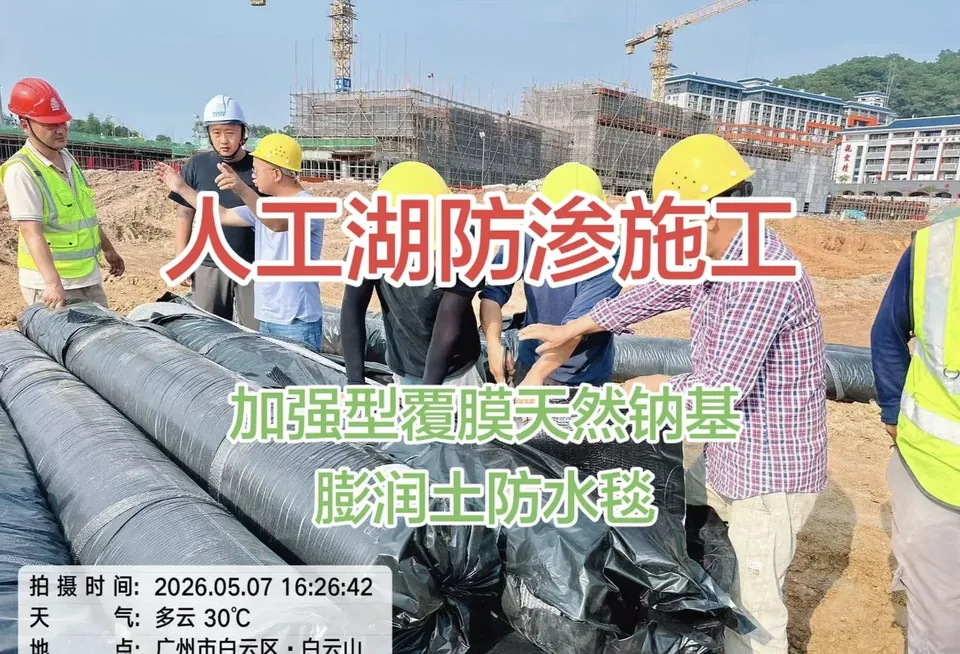
GCL Supply and Field Quality Control in Guangzhou
GCL supply for an artificial lake in Baiyun District, with field sampling and testing photographs.
View project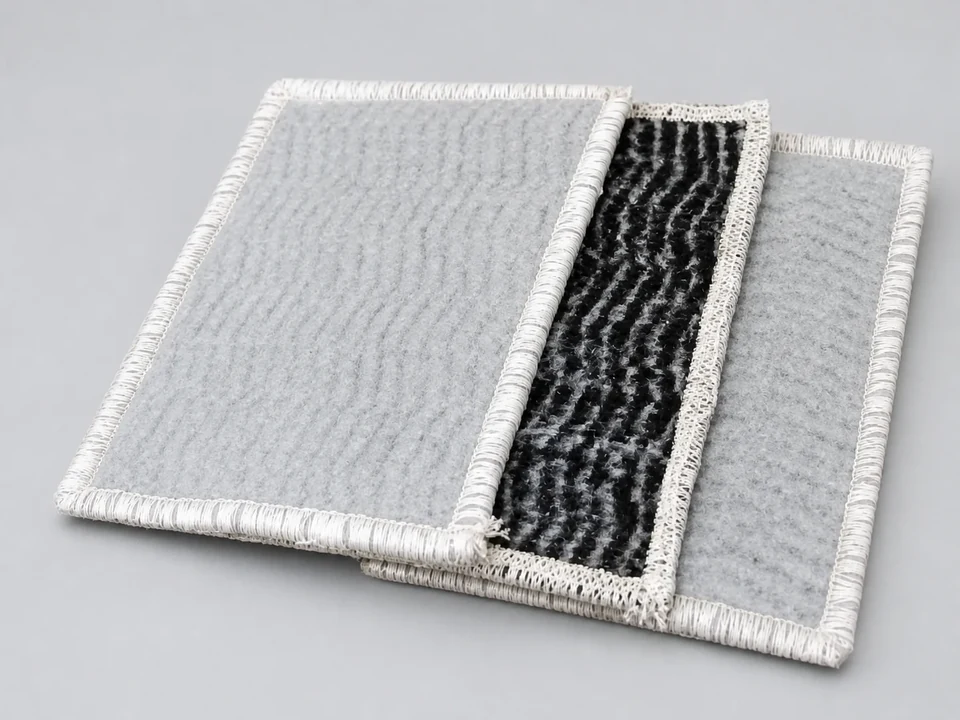
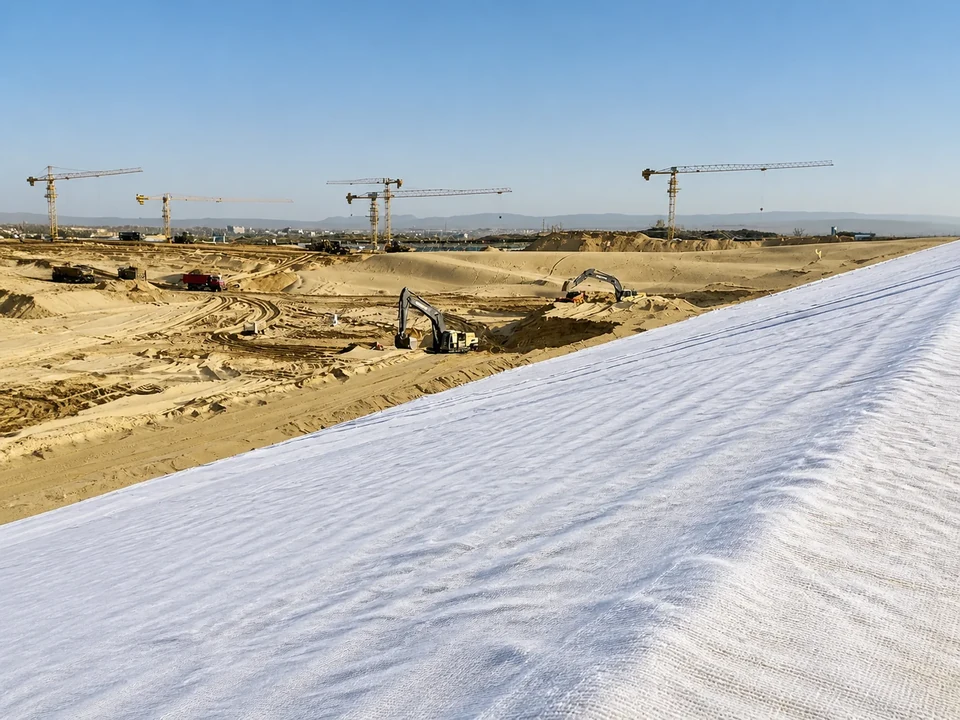
Needle-punched sodium bentonite GCL for lining and containment.
Explore VABREN GCL supply projects in Guangzhou and Guang'an.
GCL supply for an artificial lake in Baiyun District, with field sampling and testing photographs.
View project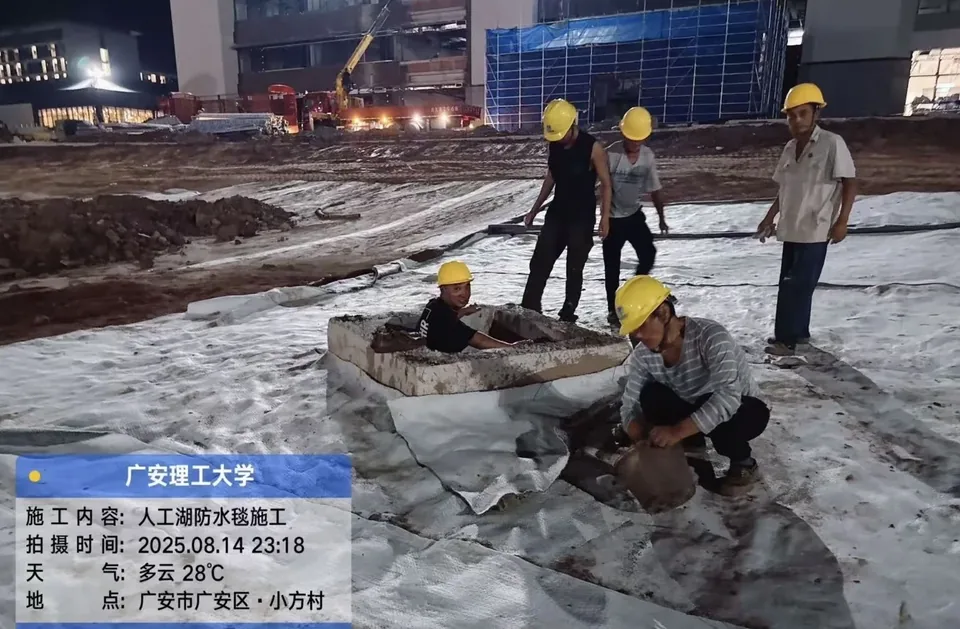
GCL supply in Guang'an, with panel placement, structure details and night-time cover works.
View projectTotal GCL mass and bentonite mass are different. Reference models guide comparison; supply construction and test documents are confirmed per order.
Field photographs of roll deployment, seam preparation and checks before covering.
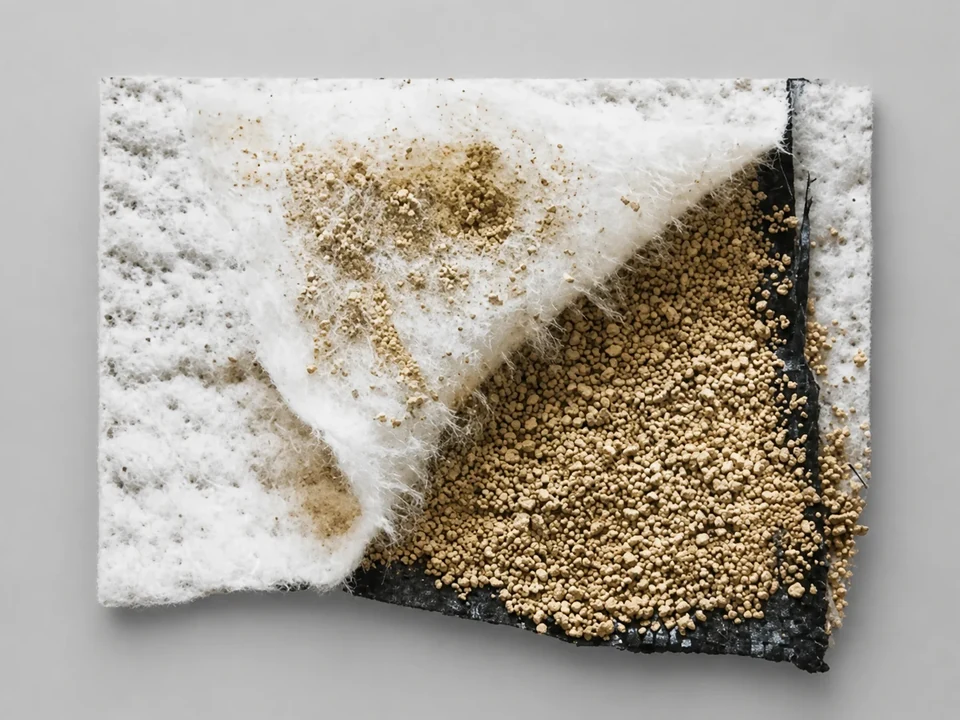
A geosynthetic clay liner (GCL) is a factory-produced hydraulic barrier that combines a layer of natural sodium bentonite with supporting geotextiles. Needle punching connects the layers so the supplied roll can be handled and installed as one composite lining material.
VABREN is a geosynthetic clay liner manufacturer and supplier in China. Our needle-punched sodium bentonite liner combines woven and nonwoven geotextiles for containment and waterproofing projects. Compare the GCL-NP, GCL-OF and GCL-AH reference requirements in the technical specifications, then confirm the construction, roll specifications and test documents for your project.
The woven carrier and nonwoven cover contain a controlled bentonite core. When properly confined and hydrated, sodium bentonite swells and forms a low-permeability clay barrier. The geotextiles support handling and reinforcement, while the bentonite provides the primary sealing function.
Typical uses include landfill base and cap systems, wastewater and process ponds, canals, reservoirs and dams, mining containment, cutoff walls, secondary containment and other environmental barrier systems.
Select the GCL around the contained liquid or waste, required hydraulic conductivity, confining stress, slope geometry, internal and interface shear behavior, subgrade condition, hydration environment, adjoining geosynthetics and applicable project specification. Membrane-backed and other special structures require separate confirmation.
Compare the GCL-NP, GCL-OF and GCL-AH requirement values in the supplied specification schedule. Confirm the selected model, construction and inspection documents before ordering.
| Property / unit | GCL-NP | GCL-OF | GCL-AH |
|---|---|---|---|
| GCL mass per unit areag/m² | ≥4000 and not less than the specified value | ≥4000 and not less than the specified value | ≥4000 and not less than the specified value |
| Bentonite swell indexmL/2 g | ≥24 | ≥24 | ≥24 |
| Methylene blue absorptiong/100 g | ≥30 | ≥30 | ≥30 |
| Tensile strengthN/100 mm | ≥600 | ≥700 | ≥600 |
| Elongation at maximum load% | ≥10 | ≥10 | ≥8 |
| Peel strength: nonwoven / woven geotextilesN/100 mm | ≥40 | ≥40 | — |
| Peel strength: PE film / nonwoven geotextileN/100 mm | — | ≥30 | — |
| Hydraulic conductivitym/s | ≤5.0 × 10⁻¹¹ | ≤5.0 × 10⁻¹² | ≤5.0 × 10⁻¹² |
| Hydrostatic pressure resistanceMPa / h | 0.4 MPa, 1 h, no leakage | 0.6 MPa, 1 h, no leakage | 0.6 MPa, 1 h, no leakage |
| Fluid lossmL | ≤18 | ≤18 | ≤18 |
| Bentonite durabilitymL/2 g | ≥20 | ≥20 | ≥20 |
Values are specification requirements, not measured batch test results or a certificate. A dash means no value is stated in the supplied schedule; it does not mean zero. Mass per unit area refers to the GCL composite, not bentonite-only mass. Confirm roll dimensions, bentonite mass, applicable test procedures and the required inspection documents for the order.
Place GCL on a prepared, stable surface and keep it dry before covering. Deploy panels in the approved orientation, maintain specified overlaps, apply supplementary bentonite where required and prevent wrinkles, contamination, premature hydration and vehicle damage. Penetrations, anchors and transitions must follow the project drawings and method statement.
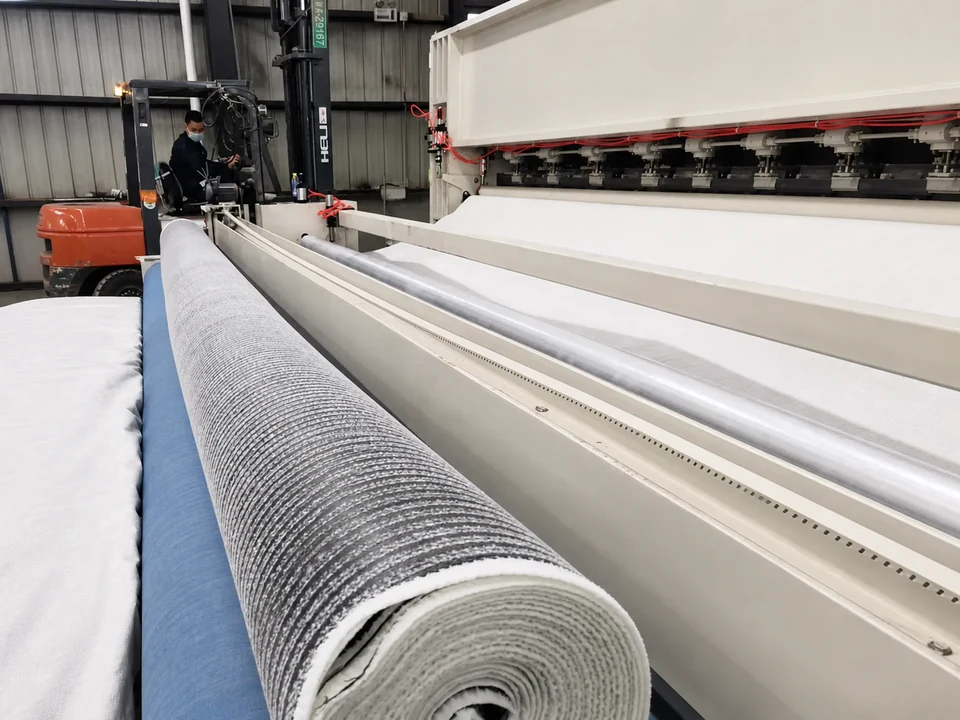
A typical process includes geotextile feeding, controlled bentonite placement, needle punching, edge finishing, rolling and inspection. The agreed inspection plan should identify bentonite mass, geotextile construction, tensile and peel behavior, swell index, moisture, fluid loss, dimensions and any project-specific hydraulic or shear testing.
GCL is supplied in moisture-protected rolls with grade and dimensions identified. Rolls should remain wrapped, elevated and dry during storage. Core support, lifting arrangement, labels and container loading are confirmed according to roll weight and transport conditions.
Review panel layout, side and end overlaps, bentonite seam treatment, rain exposure and checks before covering. The approved product procedure and project drawings define the actual installation dimensions.
Read the geosynthetic clay liner installation and overlap guide →Made to specification: Most products are made to order according to the required specifications. Send the product, dimensions, grade and quantity for confirmation.
Production cycle: The production cycle for most orders is approximately 15 days. The schedule for the selected product and quantity is confirmed in the quotation. Production time does not include transport to the destination.
Minimum order quantity: The minimum order quantity varies by product and specification. Contact us with your requirements to confirm the quantity for your order.
Samples: Samples are provided free of charge; the customer pays the sample shipping costs. The sample type and size are confirmed according to the product requirements.
Use these resources to prepare your material specification and installation questions.
Specification not final? Send your application, quantity and destination.
Email any drawings or specifications to info@vabren.com. Include the product, quantity and destination so we can match them to your inquiry.
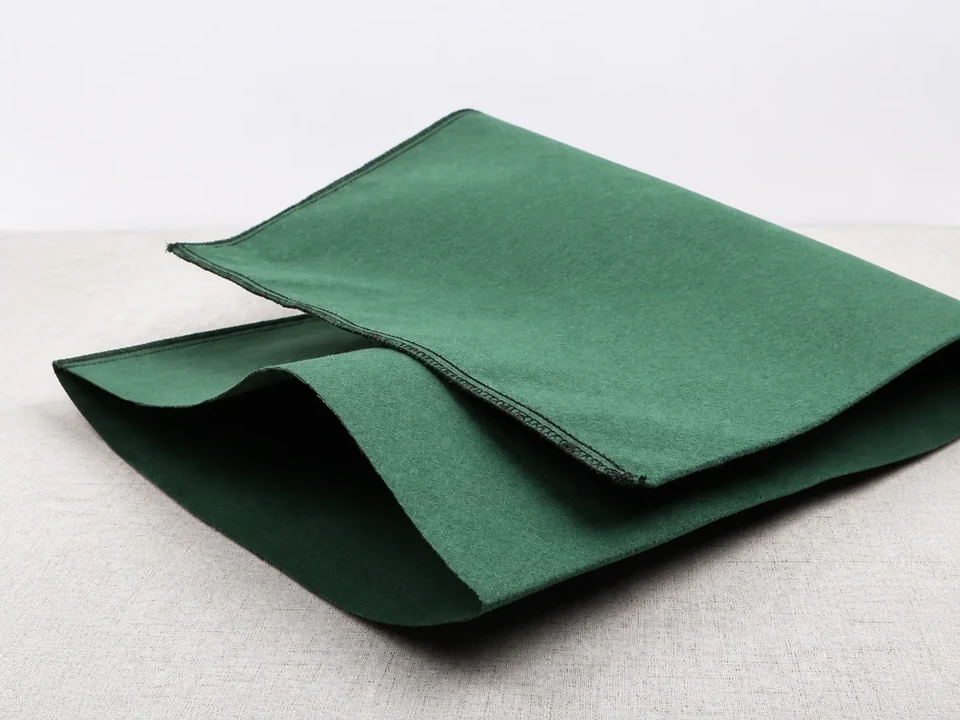
Permeable geotextile bag system for vegetated slope stabilization, erosion control and ecological restoration.
View details →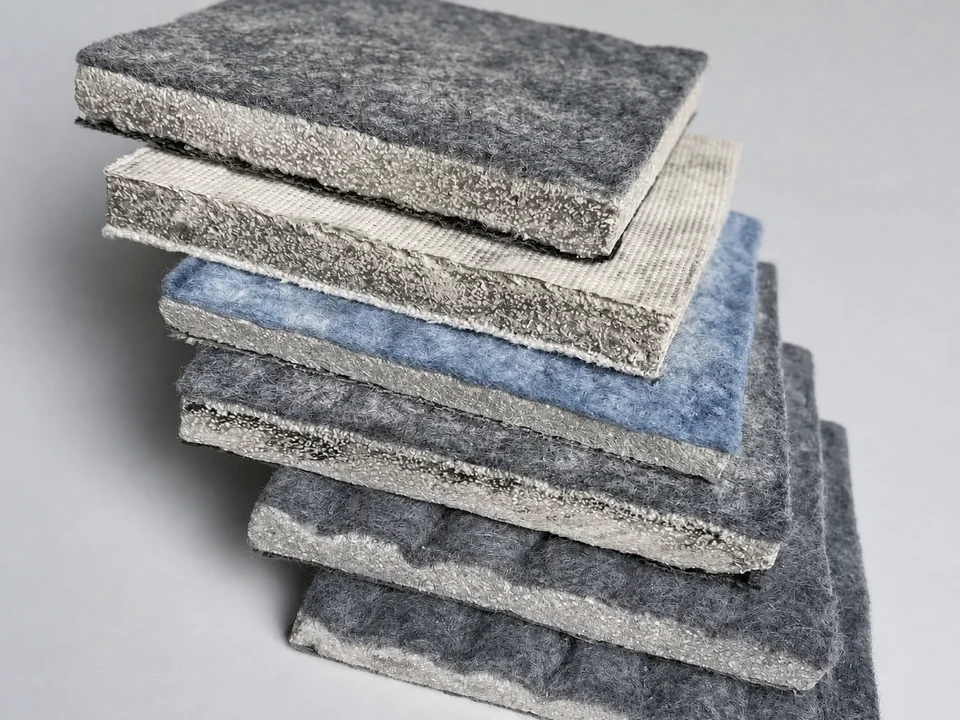
Water-activated geosynthetic cementitious composite mat for rapid channel lining, slope protection and erosion-control works.
View details →