Geosynthetic Clay Liner
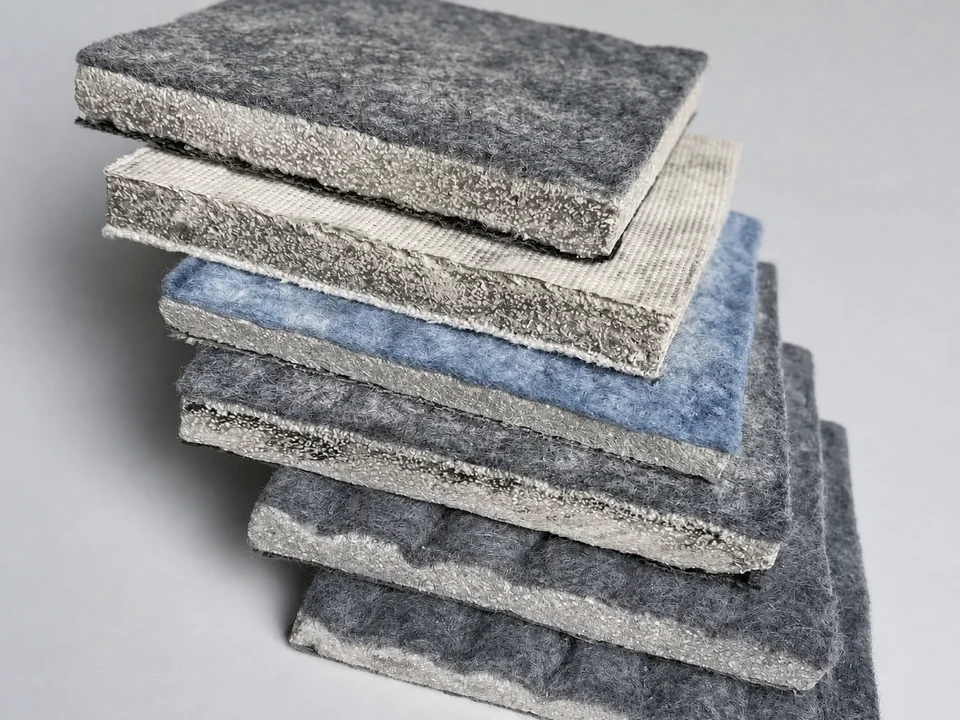
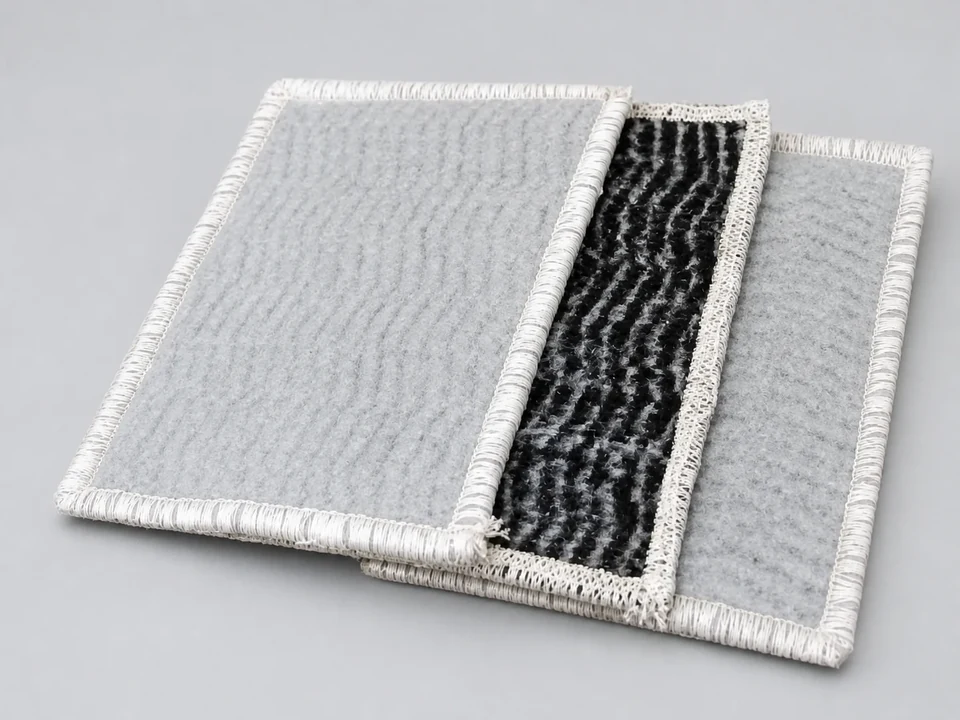
Needle-punched sodium-bentonite composite barrier for landfill, water and environmental containment systems.
View details →Permeable geotextile bag system for vegetated slope stabilization, erosion control and ecological restoration.
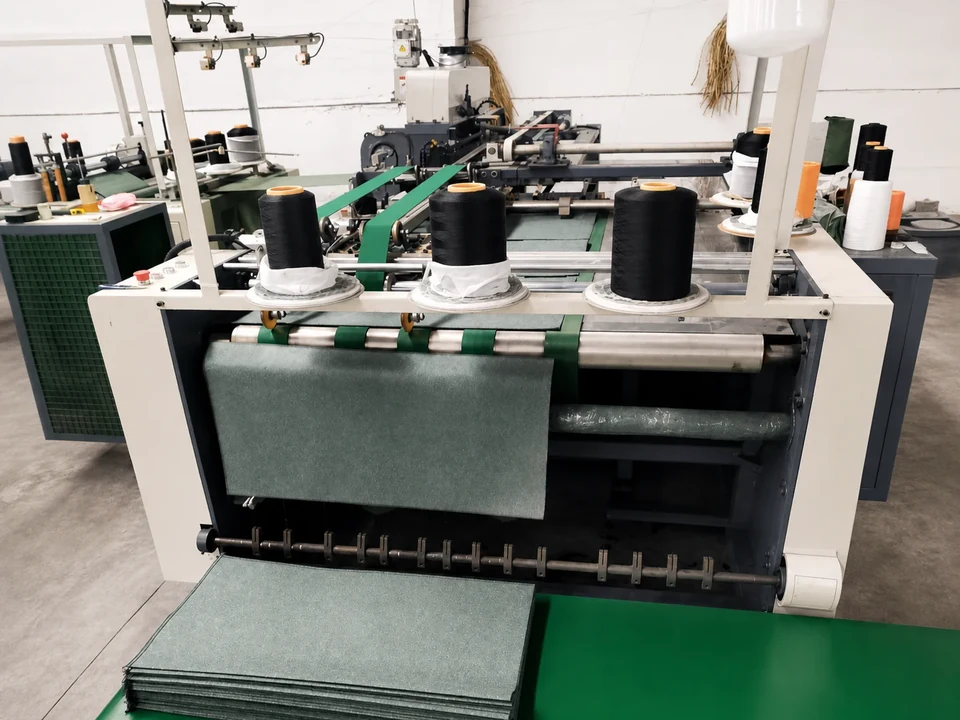


Explore the ecological slope protection bag workshop in 360°, showing production equipment, green fabric rolls and bundled bags.
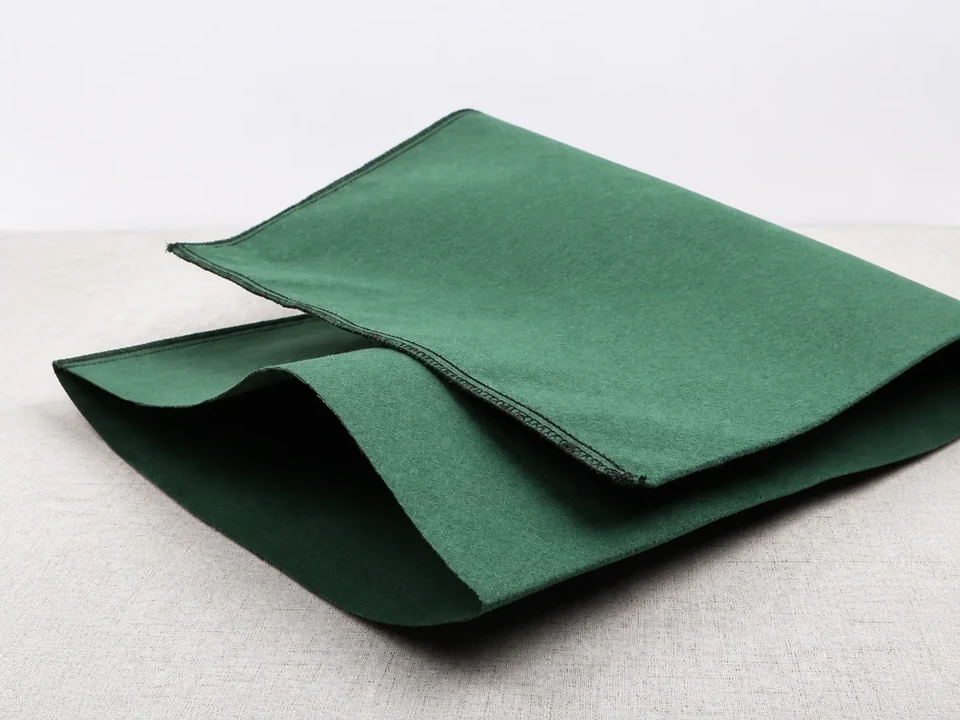
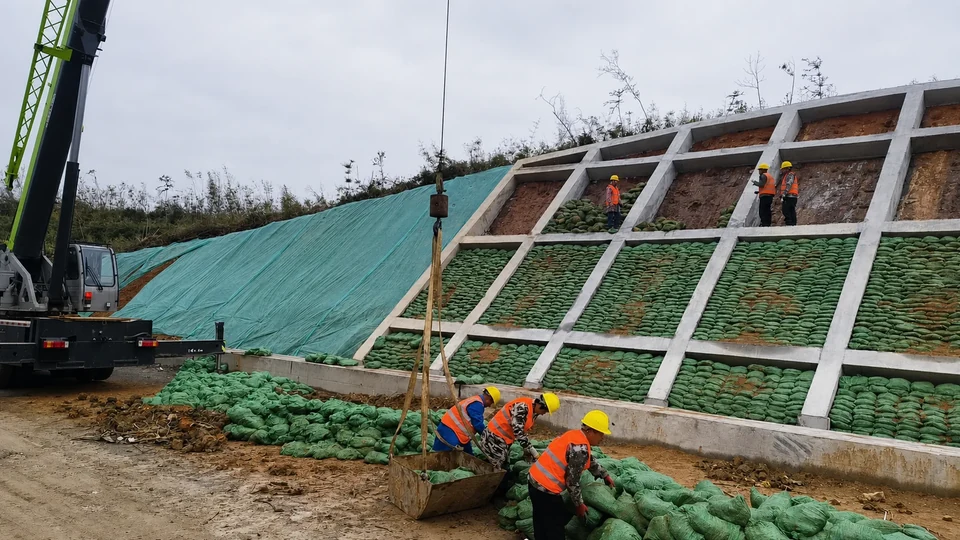
Explore the ecological bag production line ↗An ecological slope protection bag is a sewn, permeable geotextile unit filled with selected soil or growing medium and stacked to form a flexible vegetated facing. The bag provides temporary confinement and erosion resistance while allowing drainage and supporting plant establishment. It is also described in export markets as an ecological bag, vegetation geobag or geotextile slope-protection bag.
The permeable fabric helps retain the selected fill while allowing water exchange. Bags are placed in staggered courses and may be connected, pinned or anchored according to the slope design. As vegetation develops, roots interact with the growing medium, adjacent bags and prepared slope. The finished system depends on toe support, drainage, fill selection, plant choice and maintenance—not on the bag alone.
Typical uses include road and railway slopes, riverbanks and channels, reservoir margins, landscape retaining faces, mine and quarry restoration, construction-site erosion control and selected shoreline or wetland restoration works. Hydraulic exposure, flood level and scour risk require project-specific engineering review.
Select the system around slope height and angle, foundation and toe condition, surface and subsurface water, expected erosion or scour, fill gradation, vegetation, exposure period, installation access and design life. Fabric mass alone is not a complete specification; tensile, tear, seam, opening-size, permeability and UV requirements should match the project.
The fill must provide enough structure for placement while supporting drainage and the selected plants. Very coarse or sharp material can damage the fabric, while excessively fine or poorly drained fill can impair establishment. Plant species should be chosen for climate, water level, slope orientation, soil chemistry and maintenance capability. Seed mix and fertilizer should follow the landscape or ecological design.
Provide surface-water interception, internal drainage and a stable toe where required. Connectors help align adjacent units but do not replace a designed foundation, geogrid reinforcement or anchorage where the slope height and loads require them. Riverbank and channel projects also require assessment of flow velocity, drawdown, wave action and local scour.
Keep empty bags dry and protected from prolonged sunlight before use. Avoid dragging filled units over sharp surfaces. During installation, check fabric condition, dimensions, seam integrity, fill consistency, closure, course alignment, connectors, drainage outlets and visible damage. Repair or replace damaged units before they are covered by later courses.
Please send the slope dimensions and drawing, slope angle, soil and water conditions, required bag size and color, preferred PP or PET fabric, fabric mass or tested-property requirements, fill and vegetation plan, connector or anchoring details, quantity and destination. VABREN will confirm the available construction and documentation before quotation.
The ranges below are supplier-reference options for preliminary selection, compiled from current ecological-bag product literature. Final fabric, dimensions, seam construction, test methods and guaranteed values require the approved factory TDS and order specification.
| Product type | Fillable sewn geotextile bag for vegetated slope and erosion-control systems |
|---|---|
| Fabric options | Needle-punched nonwoven polypropylene (PP) or polyester (PET), subject to confirmation |
| Reference bag sizes | 40 × 60 cm and 40 × 80 cm; custom dimensions reviewed per project |
| Reference fabric mass | Approximately 100–300 g/m² for common grades; heavier constructions subject to confirmation |
| Color | Green or black standard options; other colors subject to confirmation |
| Closure and accessories | Sewn or tied closure; connecting buckles, pins or anchoring accessories reviewed with the system layout |
| Fill material | Selected topsoil, sand-soil blend or engineered growing medium according to vegetation and structural design |
| Supply form | Empty bags compressed in bales or cartons for efficient transport |
| Selection item | Why it matters | Information to confirm |
|---|---|---|
| Polymer and fabric construction | Affects durability, permeability, handling and root interaction | PP or PET; needle-punched grade and stabilizer package |
| Bag dimensions and filled geometry | Controls course height, face angle, unit mass and installation output | Flat size, closure allowance and target fill percentage |
| Fabric mass and tensile performance | Supports filling, placement and long-term confinement | Required mass, tensile method and acceptance value |
| Seam strength and closure | The seam must remain stable during filling, compaction and placement | Stitch type, thread, closure and seam test requirement |
| Opening size and permeability | Supports drainage while helping retain the selected fill | Fill gradation, apparent opening size and water-flow requirement |
| UV resistance | Important before vegetation covers exposed fabric | Exposure period and retained-strength requirement |
| Connection and anchorage | Maintains alignment between courses and at slope edges | Connector type, setback, toe support and anchor detail |
| Vegetation system | Rooting and establishment depend on climate and growing medium | Plant species, seed method, irrigation and maintenance plan |
Slope or retaining-face geometry, water condition, design function, fabric polymer and mass, bag dimensions, fill material, vegetation plan, color, connector or anchoring arrangement, quantity, destination and any project drawing or specification.
SIM-20260729-11 · PP · 10 kN/m · 40 × 60 cm
Send your quantity, destination and any project requirements.
Send the slope dimensions and angle, soil and water conditions, required bag size and color, fabric polymer and mass, fill and vegetation plan, connector or anchoring details, quantity, destination and any project drawing or specification.
Send project drawings and specifications to info@vabren.com. Include the product name, quantity and destination so we can match your documents to the inquiry.
WhatsApp: +86 133 5538 7555
Made to specification: Most products are made to order according to the required specifications. Send the product, dimensions, grade and quantity for confirmation.
Production cycle: The production cycle for most orders is approximately 15 days. The schedule for the selected product and quantity is confirmed in the quotation. Production time does not include transport to the destination.
Minimum order quantity: The minimum order quantity varies by product and specification. Contact us with your requirements to confirm the quantity for your order.
Samples: Samples are provided free of charge; the customer pays the sample shipping costs. The sample type and size are confirmed according to the product requirements.