
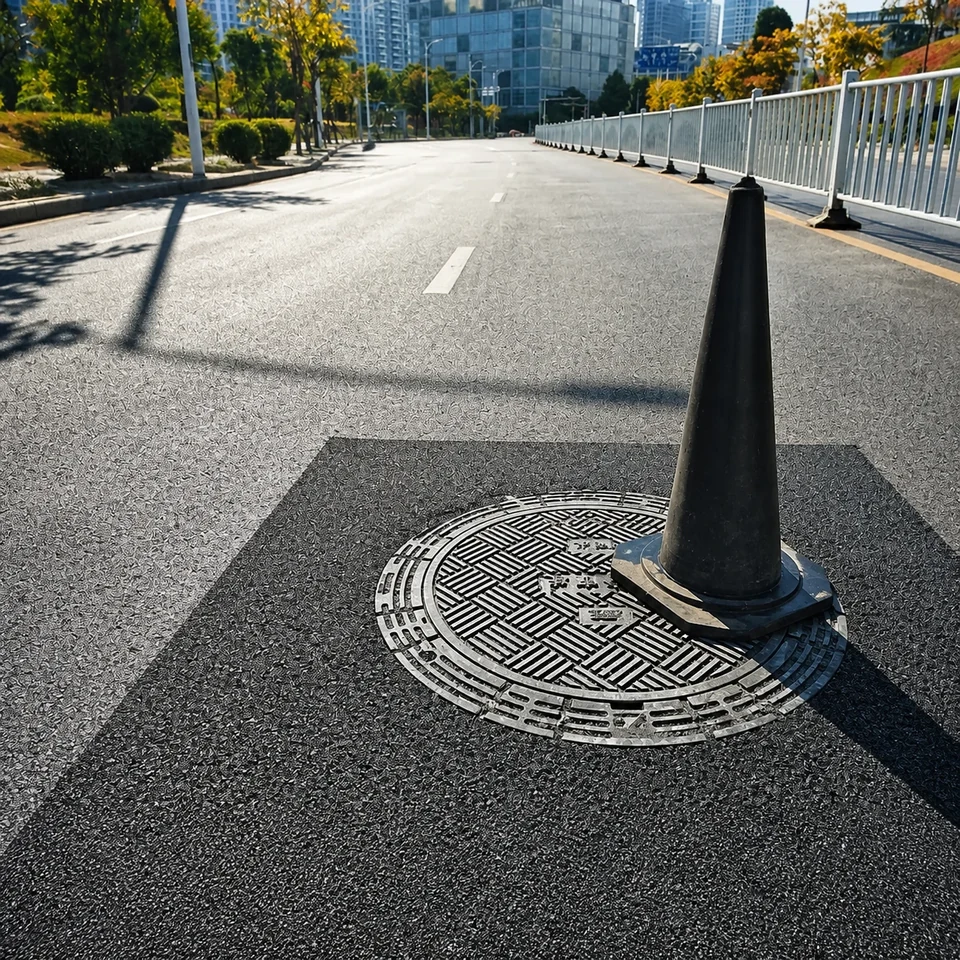
Cold mix asphalt can repair potholes without on-site heating, but it is not simply poured into a hole and left loose. Durable results depend on removing failed material, controlling repair depth, placing the mix in manageable lifts and applying sufficient compaction.
Cold mix asphalt construction method
- Inspect the failure: identify loose pavement, water, pumping, base failure and unsafe edges. Recurring structural damage needs more than surface patching.
- Prepare the pothole: remove loose aggregate, mud, debris and standing water. Cut back weak edges when the approved repair method requires a sound boundary.
- Confirm the product: check placement-temperature limits, wet- or dry-surface instructions, nominal aggregate size, shelf life and whether tack coat is required.
- Place in lifts: spread the mixture evenly. Deep holes should be built in controlled layers rather than one thick loose lift.
- Compact: work systematically from the edge toward the centre with a plate compactor, rammer, roller or other suitable equipment.
- Finish and reopen: leave the compacted patch stable and approximately flush with the surrounding pavement, then follow the product instruction for traffic reopening.
How much cold mix asphalt is needed?
Calculate compacted volume as length × width × average depth. Convert this volume to mass using the compacted density stated for the selected mixture, then add a practical allowance for irregular shape, trimming and compaction. Bag count equals required mass divided by the net mass per bag. Do not use one generic density for every formulation.
Problem: the patch remains loose
Common causes include insufficient compaction, a lift that is too thick, unsuitable temperature, contaminated material or a product that does not match the repair. Recompact with appropriate equipment if permitted; otherwise remove and replace material that cannot achieve the required condition.
Problem: the patch settles below the road
Settlement often indicates inadequate lift-by-lift compaction, underestimated depth, weak material beneath the repair or insufficient loose overfill. Deep repairs should be compacted in stages, and unstable base material should be corrected rather than hidden.
Problem: edges break or water enters
Weak, dusty or wet edges reduce support and bonding. Prepare a sound boundary and manage drainage. Tack coat should be used only when required by the selected material or approved method.
Problem: the surface tracks or sticks to tyres
Excess binder, inappropriate formulation, hot weather, inadequate compaction or opening too early may cause tracking. Check storage and placement instructions and use the grade intended for the climate and traffic condition.
Problem: the pothole returns quickly
Repeated failure may result from drainage, base movement, utility-trench settlement or extensive surrounding pavement damage. Cold mix cannot correct an unresolved structural or water problem; investigate the cause before repeated patching.
Information needed for a quotation
- Pavement type, pothole dimensions and repair depth
- Traffic duty and lowest placement temperature
- Wet or dry site condition and available compaction equipment
- Required package size, storage period and quantity
- Destination and applicable project requirements