
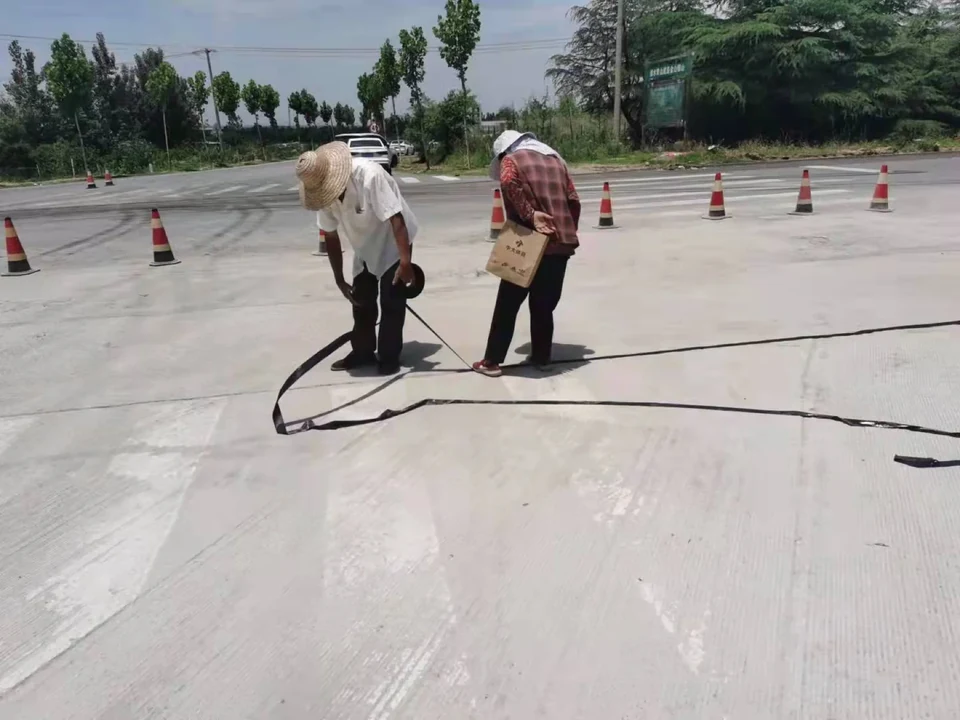
Crack sealing tape and hot-applied sealant both help limit water entry, but they use different installation methods. Tape is a preformed surface strip, while hot-applied material is melted and placed into a prepared crack or joint reservoir.
Quick comparison
| Selection point | Crack sealing tape | Hot-applied sealant |
|---|---|---|
| Equipment | Basic cleaning, positioning and pressing or approved heating tools | Thermostatically controlled melter and application hose or wand |
| Typical work scale | Localized, scattered or rapid maintenance | Continuous routes and larger programmed sealing work |
| Placement | Over the prepared crack surface | Into a routed or prepared reservoir |
| Main controls | Surface condition, width, adhesion and pressing | Reservoir geometry, dryness, material temperature and cooling |
When tape may be suitable
Tape can suit localized cracks where rapid installation and limited equipment are important. The pavement must be stable, clean and compatible with the selected tape and any primer or heating method.
When hot-applied sealant may be suitable
Hot-applied sealant is often considered for planned crack-sealing programs and routed reservoirs where controlled filling is required. It needs trained operators, temperature control and safe heating equipment.
Neither product repairs structural failure
Pumping, major settlement, unstable slabs, severe rutting and wide moving failures require investigation and possibly structural repair. A surface seal cannot correct movement originating below the pavement.
Inquiry checklist
Send pavement type, crack width and movement, total length, climate, surface condition, available equipment, traffic-opening requirement, package preference and destination.