
Hot-Applied Crack Sealant for Highway Pavement Maintenance
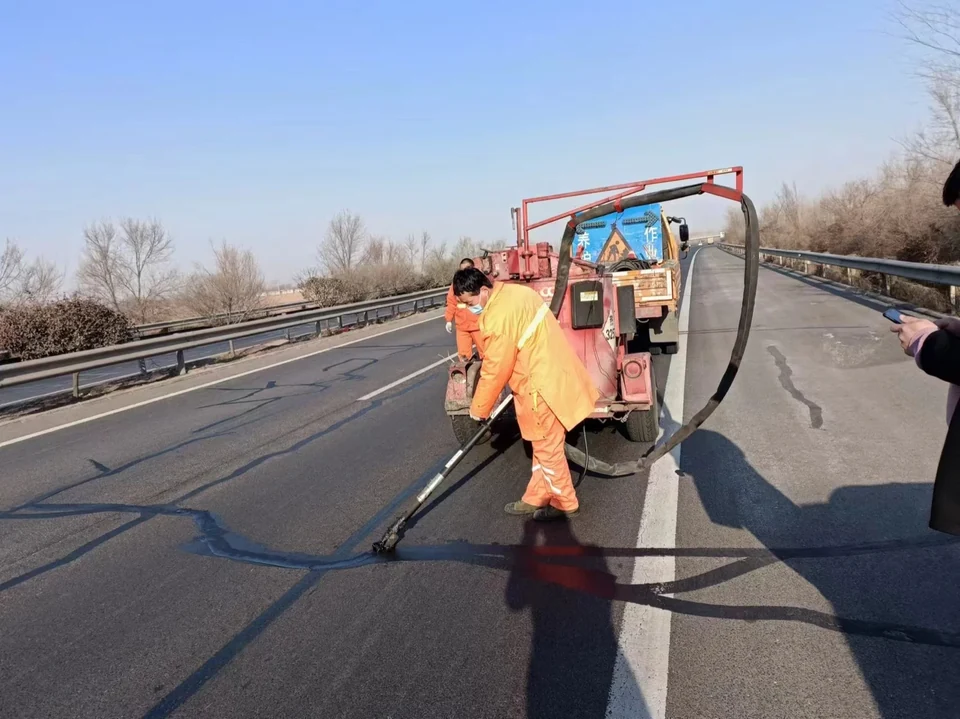
Field photographs showing heated sealant equipment and controlled placement along prepared pavement cracks.

Seal active openings before water accelerates pavement damage
The photographs document a highway crack-sealing operation using heated application equipment. Hot-applied sealant is placed into or over prepared cracks to limit water and incompressible material entering the pavement opening.
The case does not identify a universal grade. Sealant type must be selected for pavement structure, climate, crack movement, routing geometry and the applicable road-maintenance specification.
Water-entry control
A continuous seal helps reduce direct water intrusion through open pavement cracks and joints.
Flexible sealing
Climate-matched polymer-modified grades are intended to accommodate suitable pavement movement within their service range.
Targeted maintenance
Crack sealing treats localized openings without replacing the entire pavement surface when conditions are appropriate.
Preparation and temperature control determine the result
Identify suitable cracks, clean and dry the reservoir, route where required, and heat the sealant within the confirmed application range. Place material continuously while controlling fill level and avoiding contamination.
Traffic should reopen only after the applied material has cooled or cured sufficiently. Wet cracks, unsuitable temperatures, debris, incorrect heating and excessive overbanding can reduce performance.
Match the sealant to the pavement and climate.
Send the road type, crack dimensions, lowest and highest service temperatures, quantity, packaging and destination.
Request a quotation