
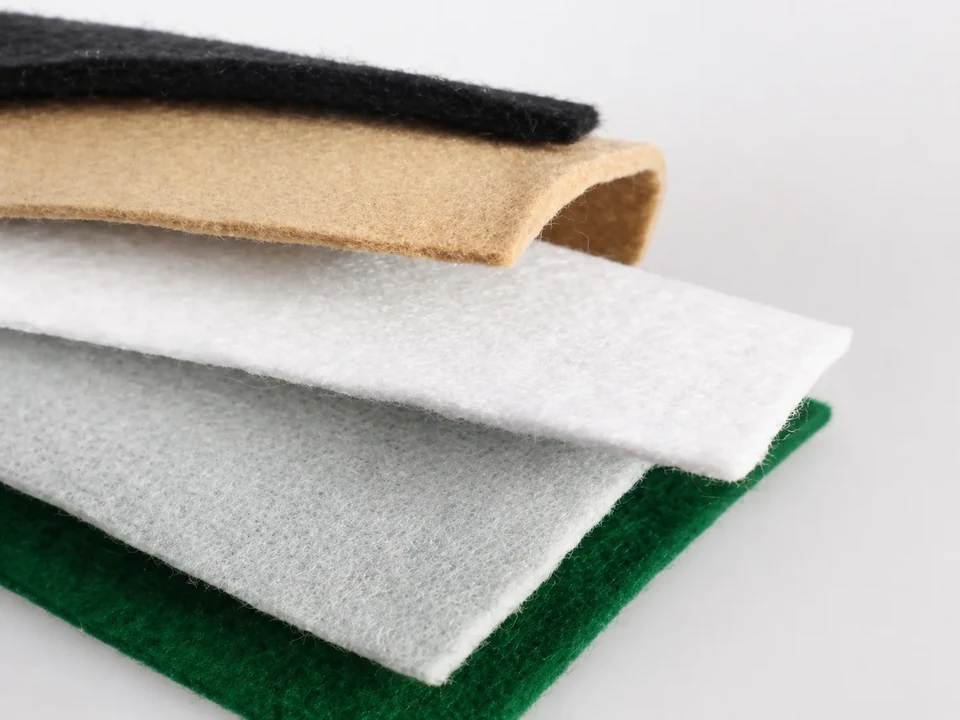
A protection geotextile reduces direct contact between geomembrane and rough subgrade, drainage aggregate or cover soil. Selection should not be based on GSM alone.
Define the protection problem
Confirm whether protection is below, above or on both sides of the liner. Record particle shape and size, compaction, settlement, hydrostatic load and construction sequence.
Selection method and parameters
Needle-punched nonwovens are commonly used for cushioning. Review polymer, manufacturing process, mass per unit area, thickness under stated pressure, static puncture or CBR puncture, dynamic perforation where specified, tensile properties, roll size and installation survivability.
Installation cautions
Remove sharp objects, correct unstable subgrade, avoid dragging through mud, stabilize overlaps, patch damage and prevent direct traffic until adequate cover is placed. Geotextile does not compensate for poor preparation.
Products and case
Compare short-fiber geotextile and filament geotextile. See the containment pond case.
Frequently asked questions
Can GSM alone determine puncture protection?
No. Thickness, puncture properties, aggregate, load and installation also matter.
Does geotextile replace subgrade preparation?
No. Roots, sharp debris, voids and unstable areas must still be corrected.
Request a protection-layer review
Send substrate and aggregate photos, particle size, liner thickness, loading, area and standard.