
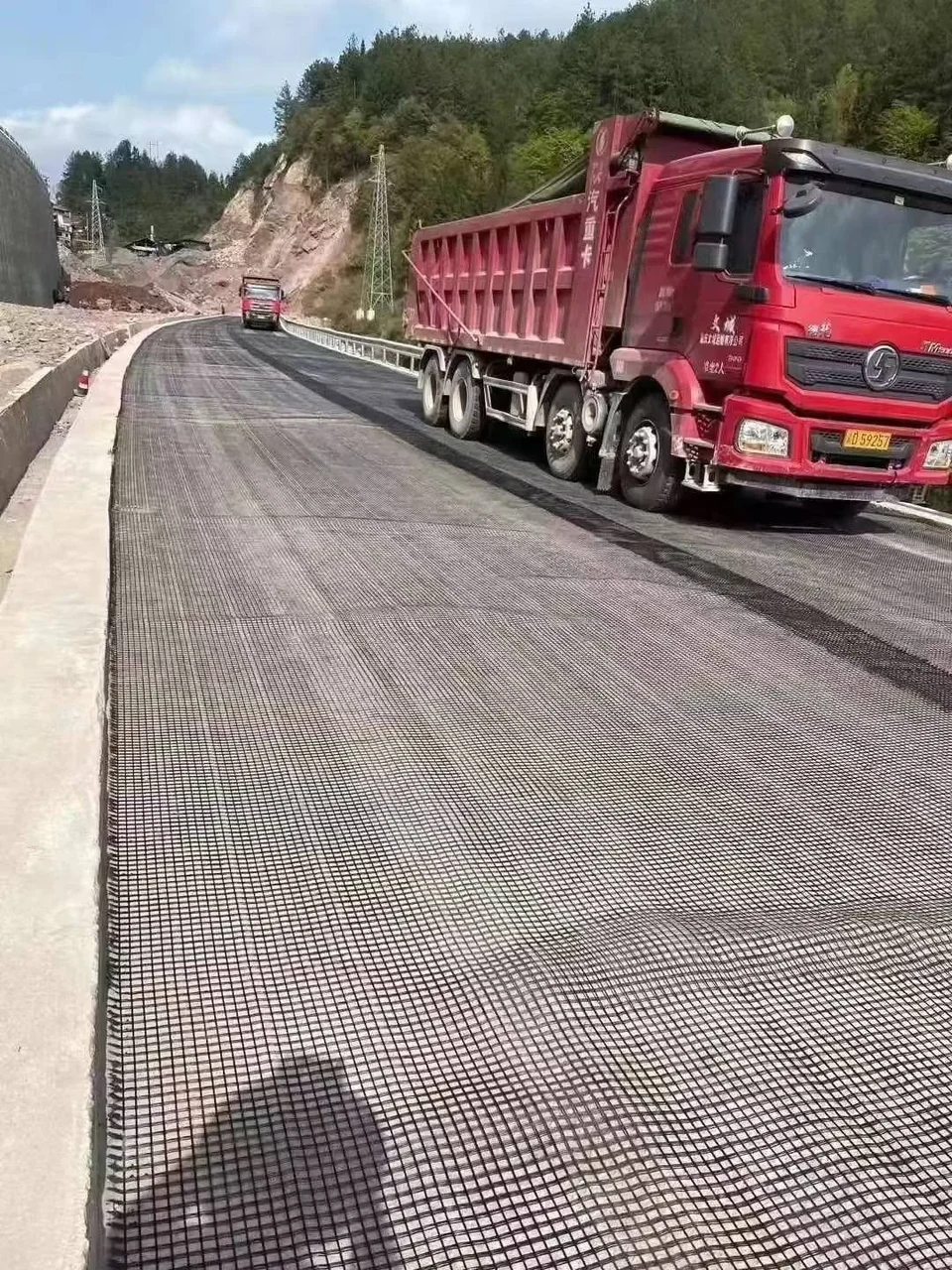
Geogrid can improve aggregate confinement and load distribution when correctly selected and installed in a designed road structure. It does not repair unidentified drainage or subgrade problems.
Define the road problem
Record subgrade strength, groundwater, traffic, aggregate, existing pavement and available depth. Confirm whether the target is subgrade stabilization, base reinforcement or asphalt reinforcement.
Select and specify
Biaxial plastic geogrid is commonly considered within aggregate layers. Fiberglass geogrid is commonly positioned near asphalt layers for pavement reinforcement. Check polymer, bidirectional tensile strength, strength at specified strain, aperture, junction performance, roll width, layer position and standard.
Choose the road layer before installation
Start with the approved pavement section. Aggregate reinforcement and asphalt interlayers are different construction routes; their installation details are not interchangeable.
Aggregate base or subgrade
For plastic geogrid in the aggregate structure, confirm the supporting soil, fill, layer position, grid direction, overlaps and initial cover against the approved design. Record placement checks before covering.
Asphalt interlayer
For fiberglass geogrid, confirm surface preparation, the selected grid type, bonding system, overlaps and overlay procedure. Follow the approved method for the supplied product; the aggregate sequence below does not describe asphalt installation.
Keep a record for each work section
Download blank road geogrid installation record (CSV)
Blank site template. Record the route used and mark the other route not applicable. Project-approved details control installation and acceptance.
Construction sequence
The sequence below concerns aggregate-layer reinforcement. For an asphalt interlayer, use the fiberglass installation route above and the approved product procedure.
- Prepare and proof-check the subgrade.
- Unroll flat in the planned direction.
- Secure overlaps and curves to the drawing.
- Place aggregate without displacing the grid.
- Provide the required initial lift before traffic.
- Compact and inspect damaged areas.
Products and case
Review biaxial plastic geogrid, fiberglass geogrid and the road-base case.
Frequently asked questions
Can vehicles drive on exposed geogrid?
Avoid direct traffic unless the approved procedure permits it.
How much overlap is required?
It depends on subgrade, product and design; use the approved drawing.
Prepare a road inquiry
Send the section, soil, traffic, aggregate, function, standard, area and destination.