
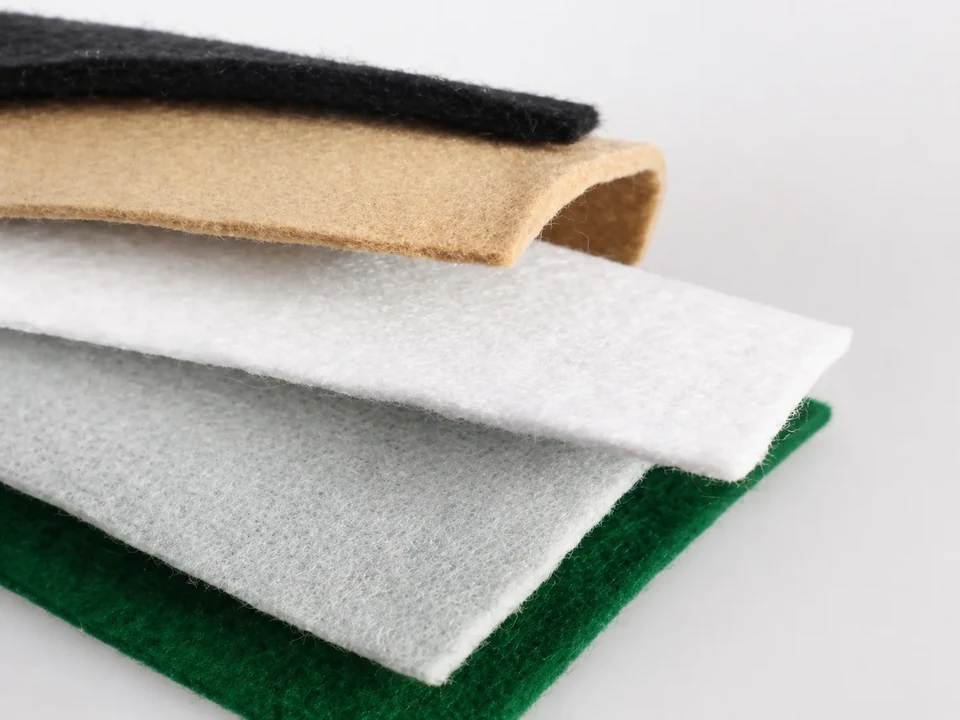
A protection geotextile reduces direct contact between geomembrane and rough subgrade, drainage aggregate or cover soil. Selection should not be based on GSM alone.
Define the protection problem
Confirm whether protection is below, above or on both sides of the liner. Record particle shape and size, compaction, settlement, hydrostatic load and construction sequence.
Prepare a traceable protection-layer review
Use the following groups to organize project information before comparing candidates or requesting tests. Record missing information as unresolved rather than assuming a material grade.
- Contact materials and liner arrangement
- Identify which side of the liner needs protection. Record liner material and thickness, adjacent layers, aggregate size and shape, subgrade condition and photographs of the actual contact materials.
- Loading and placement conditions
- Provide the project loading, duration and temperature conditions, together with the planned cover placement, compaction and construction equipment. Keep construction conditions separate from operating conditions; do not assume a universal cover thickness.
- Candidate identity and comparable evidence
- Link each candidate and material lot to its data sheet and report. Record mass, thickness with its measurement pressure, test method and edition, units and specimen identity. Compare results on the same stated basis.
- Project review and unresolved items
- Ask the designer and laboratory whether testing of a representative contact assembly is needed. Agree the criteria before testing, then record the chosen arrangement, report references, reviewer and remaining questions. Do not prefill an approval.
Check the scope of the test method
Index puncture alone does not demonstrate complete liner-system protection. The designer and laboratory select the applicable method, edition, conditions and acceptance criteria.
Keep the information and evidence together
Download the blank protection-layer review record (CSV)
Blank planning record only. Attach source reports and record unresolved items; it does not certify a product or approve a design.
Selection method and parameters
Needle-punched nonwovens are commonly used for cushioning. Review polymer, manufacturing process, mass per unit area, thickness under stated pressure, static puncture or CBR puncture, dynamic perforation where specified, tensile properties, roll size and installation survivability.
Installation cautions
Remove sharp objects, correct unstable subgrade, avoid dragging through mud, stabilize overlaps, patch damage and prevent direct traffic until adequate cover is placed. Geotextile does not compensate for poor preparation.
Products and case
Compare short-fiber geotextile and filament geotextile. See the containment pond case.
Frequently asked questions
Can GSM alone determine puncture protection?
No. Thickness, puncture properties, aggregate, load and installation also matter.
Does geotextile replace subgrade preparation?
No. Roots, sharp debris, voids and unstable areas must still be corrected.
Request a protection-layer review
Send substrate and aggregate photos, particle size, liner thickness, loading, area and standard.