
Tailings storage
Primary or composite lining systems designed around containment, slopes and long-term site conditions.

Project-matched liner systems for tailings storage, process ponds, heap-leach facilities and secondary containment.
The liner is selected as part of a system. Chemical exposure, subgrade, slope, interface friction, drainage and seam requirements should be reviewed together.
Primary or composite lining systems designed around containment, slopes and long-term site conditions.
Weldable barrier layers reviewed around process chemistry, loading and construction details.
Liners for wastewater, evaporation and water-storage ponds with project-specific protection layers.
Barrier systems for selected industrial and mine facilities where controlled liquid containment is required.
A quotation should identify the actual site need. VABREN can review the liner surface, thickness, adjoining geosynthetics, roll dimensions and documentation with your project information.
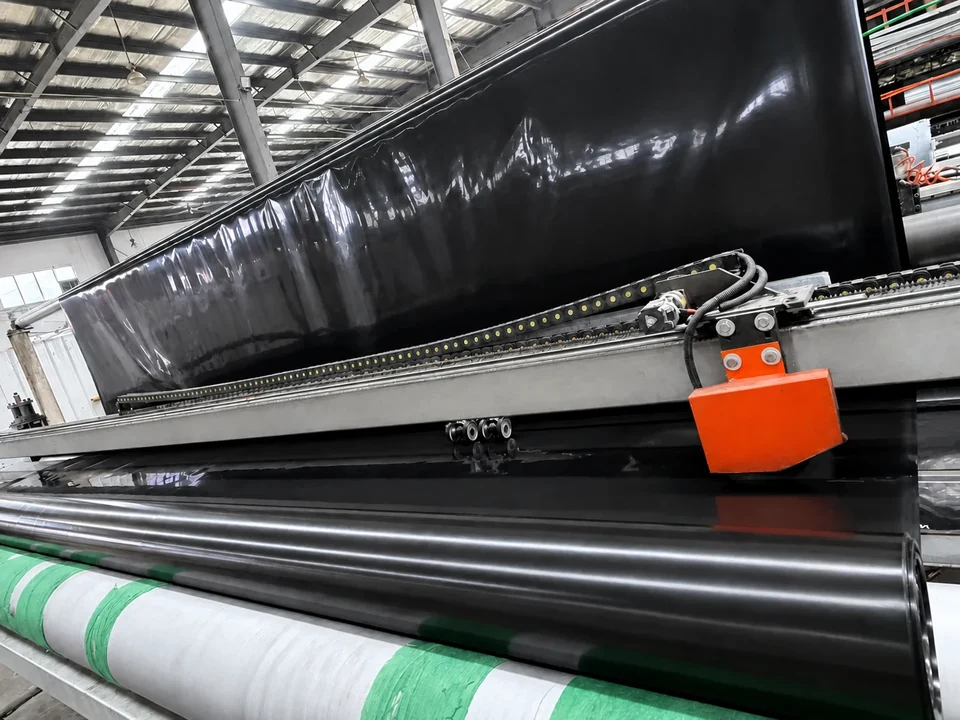
HDPE geomembrane panels were deployed as a continuous containment barrier. Panel planning and welded seam continuity are central to the installed system—not simply the membrane thickness.
View the project case →For a more useful first response, include as many of these items as are available:
Prefer a quick discussion?
WhatsApp +86 133 5538 7555
An HDPE geomembrane is one component of the containment design. Thickness alone does not establish chemical suitability, slope stability or installed leak-tightness. The project designer should define the lining system and acceptance requirements before procurement.
| Design question | Information needed for review |
|---|---|
| What will contact the liner? | Contained medium, chemical concentrations, temperature, exposure duration and project compatibility requirements. |
| Does the liner run across slopes? | Slope geometry and actual adjoining layers. A textured surface requires project-specific interface evaluation; texture alone does not establish a safe slope. |
| How will the liner be protected? | Subgrade preparation, potential puncture loads, protection layers, drainage and details at anchors or penetrations. |
| How will the installation be accepted? | Approved panel plan, welding procedure, seam testing, inspection records and any specified leak-detection method. |
Request roll or batch identification and the material tests required by the contract. These records describe the supplied sheet. They do not replace the installer's seam records, repair logs or the project's completed-system acceptance checks.
Compare smooth HDPE and textured HDPE against the design, then use the HDPE RFQ checklist to put the required tests, documents, roll plan and delivery terms in writing.
Send the contained medium, drawings, estimated area and specification for review.
