
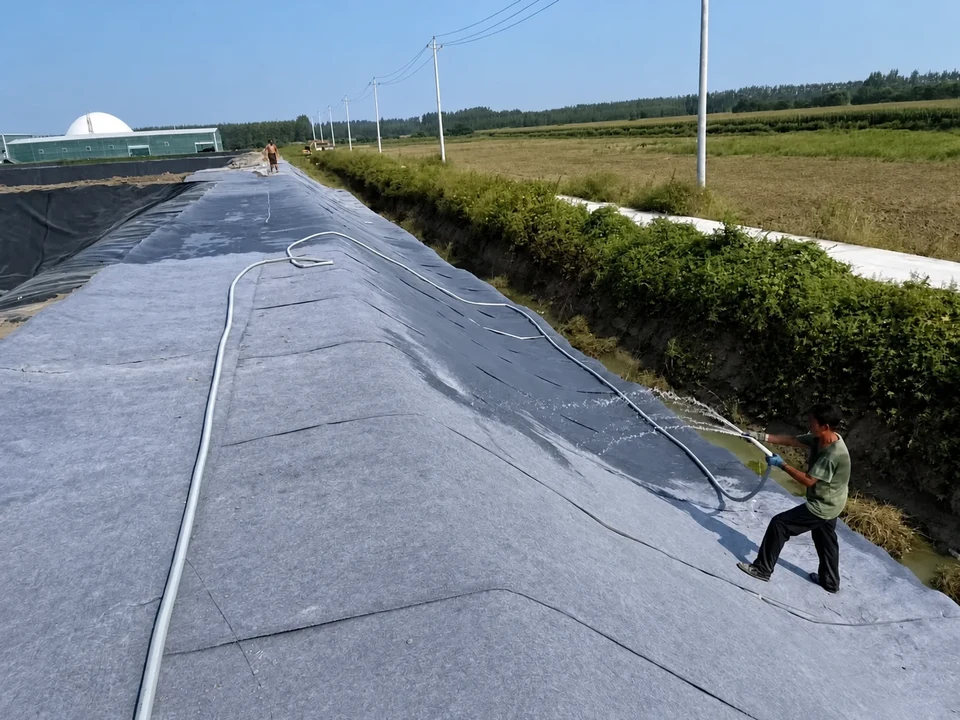
Cement blanket is a water-activated cementitious composite supplied in rolls. It remains flexible during placement and hardens after controlled hydration. Installation planning must account for working time, joints, fixing, water supply and protection during curing.
Installation sequence
- Remove loose soil, vegetation, sharp projections and standing water; shape the substrate.
- Plan roll direction, anchor trenches, terminations, drainage outlets and penetrations before cutting.
- Place and secure the material without excessive tension, bridging voids or damaging the backing.
- Form overlaps and joints using the fastening and sealing detail approved for the selected product.
- Hydrate uniformly with the required amount and method stated in the current TDS.
- Protect the material from movement, traffic, washout and premature drying during the specified curing period.
How much water is required?
Water demand varies with product thickness, cement formulation, ambient conditions and application. Use the manufacturer value for the exact supplied grade. Ensure that the full surface receives uniform hydration; excess high-pressure flow can wash material or disturb uncured joints.
Common problems
- Dry areas caused by uneven hydration.
- Loose or leaking joints caused by incorrect overlap and fastening.
- Cracking where the blanket bridges an unsupported void.
- Damage from traffic or flowing water before adequate curing.
- Poor edge performance where terminations are not anchored or sealed.
Inquiry checklist
Send the channel or slope drawing, substrate, water exposure, selected thickness, required performance, fixing and joint details, roll constraints, quantity and destination.
Standards and project approval
ASTM D8173-23 — GCCM installation and hydration guide provides an industry reference for planning site preparation, layout, installation and hydration. The selected product's approved installation method and the project drawings must define the actual fixing, joint, hydration and curing requirements.
Request the grade-specific installation method and test documents with the thickness, channel or slope drawing, substrate, water exposure and destination.
References checked: 9 October 2026. A referenced standard identifies a method or scope; product conformity is confirmed by the applicable test report.