
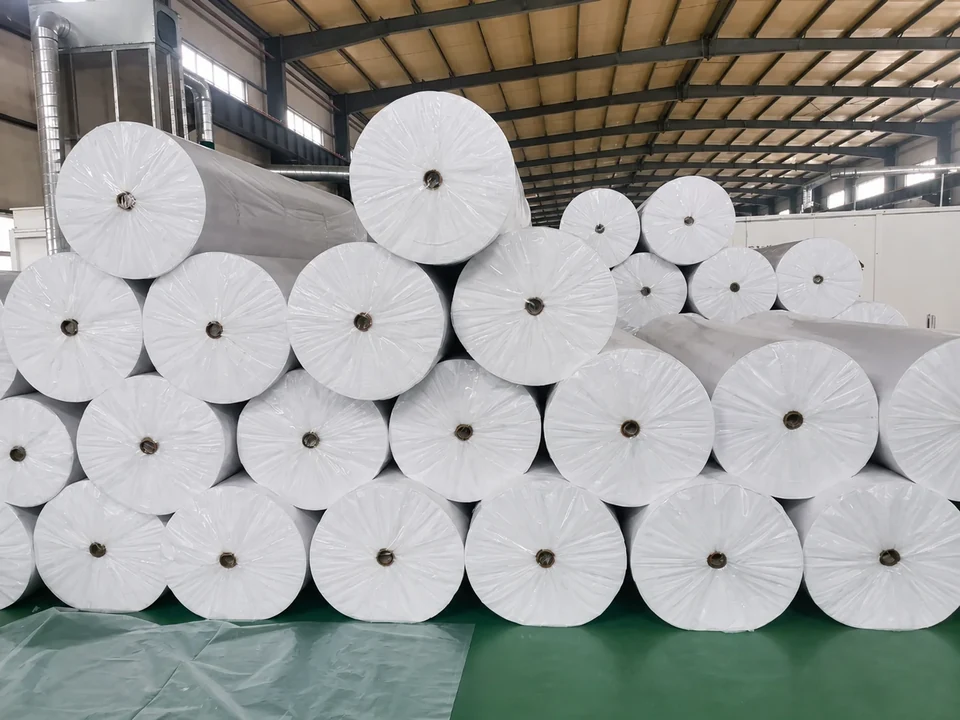
Geotextile GSM means grams per square metre and describes the mass of the fabric, not its complete performance. The appropriate GSM depends on what the geotextile must do, the condition of the soil or supporting surface, construction stress and the mechanical and hydraulic values required by the project.
Quick GSM selection reference
| Indicative mass range | Common selection direction | What still needs checking |
|---|---|---|
| About 100–200 GSM | Light separation, filtration or landscaping where installation stress is limited | Tensile strength, opening size, permeability and survivability |
| About 200–400 GSM | General civil separation, filtration, drainage and moderate cushioning | Soil grading, puncture risk, load and required test standard |
| About 400–600 GSM | Heavier cushioning and geomembrane protection applications | CBR or puncture performance, normal stress and adjacent aggregate |
| Above 600 GSM | Demanding protection layers subject to project engineering | Project-specific protection testing and constructability |
These ranges are preliminary purchasing references, not design specifications. Two fabrics with the same GSM can perform differently because of polymer, fiber structure, needling process and thickness.
Why is GSM alone not enough?
A heavier geotextile may provide more cushioning, but it is not automatically a better filter or a stronger product in every test. A technical comparison should include tensile strength and elongation, CBR or puncture resistance, characteristic opening size, water permeability or flow rate, thickness and polymer type.
GSM for separation and road construction
For separation beneath aggregate, the geotextile must survive placement and compaction while preventing excessive mixing between the aggregate and subgrade. Subgrade strength, aggregate size, construction equipment and lift thickness should guide the required survivability. Do not select a road grade from traffic level or GSM alone.
GSM for filtration and drainage
Filtration requires a balance: soil particles should be retained while water can pass through the fabric. Soil particle distribution, opening size, permeability and clogging risk are therefore more important than simply increasing GSM.
GSM for geomembrane protection
Protection layers are selected according to the supporting surface, aggregate shape, expected normal load and geomembrane thickness. Higher mass may improve cushioning, but the required puncture resistance should be confirmed by the designer or an appropriate protection test. Sharp objects and unstable areas must still be removed.
What should be included in a geotextile inquiry?
- Primary function: separation, filtration, drainage or protection
- Soil, aggregate and supporting-surface description
- Target GSM and required test values or project standard
- Polymer preference, roll width, roll length and quantity
- Destination, packing and documentation requirements